From a Baby blog at The Stir at CafeMom.com, a very interesting article and topic of conversation has sprung forth! How many of you have heard the rumor or debate about having to dispose of poop in disposable diapers into the toilet to be flushed? The warning and advisory, after all, is printed on the sides of many disposable diaper packages (though it is less common to see it than it used to be, especially on some of the big name brands).
So, head on over to read this article and find out: is there really a federal law against putting baby's dirty diaper in the trash?. Writer Amy K. dug around and did her research, going right to the governmental level to get the true scoop.
Once you've taken in this article (and the very interesting set of comments that follow it!), head on back over here and leave a comment on this post. I'd love to hear your take on this scenario. Have you always been in favor of flushing the poop? Will reading this article cause you to think differently about anything or make any changes to your personal routine? Do you know of any alternate laws in your area? We'd love to hear your take on it all!

Showing posts with label Issues in Diapering. Show all posts
Showing posts with label Issues in Diapering. Show all posts
Tuesday, August 23, 2011

Wednesday, August 10, 2011
From Birth to Potty: What 5000 Disposable Diapers per Child Looks Like
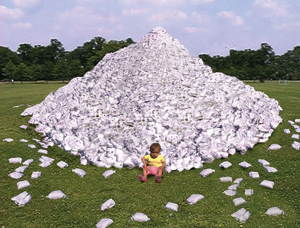
Credit Notes: I tried for a long time to find a true "image credit" for this picture as I've been seeing it on many forums & Facebook feeds, but I couldn't find the original source. If you know where it has come from or who owns the rights to it, please let me know so I can give proper credit. Thank you!
Tuesday, July 12, 2011
Pampers Lawsuit Finally Settled
 Many parents have been avidly following the Pampers lawsuit regarding the severe diaper rash and chemical burns allegedly caused by the disposable diaper company's new Dry Max formula used in theirSwaddlers and Cruisers diapers. Well, the lawsuit has finally come to an end, with rather inconclusive and disappointing results for the 59 parents who filed the claim. They received $1000 each for their wasted time (but not for any damages or harm, which Pampers maintains never happened). Pampers has made no revisions to their formula as they claim that the chemicals present indeed do not cause any rashes, burns, or other harm. I'm sure many parents would continue to claim otherwise, yet they have little power against this giant corporation, other than their power to boycott P&G products from now on.
You can read the full consumer report about the lawsuit's outcome here, or read the hundreds of original logged consumer complaints here if you are interested to learn more about the alleged harm that came from the new Dry Max formula.
Friday, June 10, 2011
New Uses For Diaper Remnants ... Including ... Stir Fry?
Now that I've got your attention, don't worry--I'm not creating a sick and twisted recipe for fricasseed fleece or sauteed liners. However, cutting edge research out of the Autonomous Metropolitan University in Mexico City does have exciting news on the front of biodegrading those pesky disposable diapers that are filling up our landfills at an alarming rate: they are feeding them to mushrooms.
As this article in The Economist puts it, Alethia Vázquez-Morillas and her colleagues have finally discovered a truly "novel way of dealing with an unpleasant problem". They have proven that cultivating an appropriate species of mushroom on top of soiled disposable diapers can do away with those darned nappies at break-neck speed. Remember the quotes and factoids being released left, right, and center about it taking hundreds of years for disposable diapers to decompose on their own (even with favorable conditions like moisture, sunlight, and oxygen)? Well, simple oyster mushrooms are giving natural decomposition a kickstart. In fact, they are diminishing the standard 200+ years of decomposition down to a shocking 4 months. That's right--in only 2 months, 90% of the disposable diaper material will be consumed by the mushrooms, and in 4 months, the entire diaper will have vanished completely.
 What is the mushrooms' secret? What hidden skill do they have that Mother Nature's other elements do not? Well, for one, they are specially equipped to deal with a particular tough and resilient material called cellulose, the main component in disposable diapers. However, for oyster mushrooms, which regularly make their home upon cellulose-ridden dead or dying tree stumps, the breakdown of this persistent material is all in a normal day's work.
What's even better is that oyster mushrooms are hardy, readily available, and relatively commonplace, being applied and consumed in culinary uses daily. Frequently enjoyed in stir fries, pastas, and soups, you can even find these little guys at your local Costco or grocery store, popular and perfect for eating. What about, however, the mushrooms that have been fed a regular diet of ... er ... soiled baby diapers? Well, Dr. Vásquez-Morillas maintains that they too are perfectly safe to eat--and she has, in fact, eaten them herself. As a quick aside to this, however, for the time being, Morillas and her cohorts used only urine-filled diapers in their study (maintaining that the urine of a healthy individual is, indeed, sterile). However, to be on the safe side, they steamed the dirtied diapers at high temperatures before feeding them to the mushrooms. They maintain that the same process of high-heat steam sterilization could also be used on fecal-filled diapers before being turned over as dinner for the oyster mushrooms (which, in turn, could provide us with our dinner).
Whether or not this turns your stomach or ignites the flame of controversy, there is still amazing credit to be given to this team of researchers who have found one clever way of dealing with the plethora of waste that modern day parents are conveniently sending to our landfills. If not all parents are willing to do their part to reduce our diaper waste problems, even in consideration of future generations, then perhaps we will have to call in the fungi after all.
Article acknowledgement: Bottom Feeders; The Economist
Image credit: True Star Health
As this article in The Economist puts it, Alethia Vázquez-Morillas and her colleagues have finally discovered a truly "novel way of dealing with an unpleasant problem". They have proven that cultivating an appropriate species of mushroom on top of soiled disposable diapers can do away with those darned nappies at break-neck speed. Remember the quotes and factoids being released left, right, and center about it taking hundreds of years for disposable diapers to decompose on their own (even with favorable conditions like moisture, sunlight, and oxygen)? Well, simple oyster mushrooms are giving natural decomposition a kickstart. In fact, they are diminishing the standard 200+ years of decomposition down to a shocking 4 months. That's right--in only 2 months, 90% of the disposable diaper material will be consumed by the mushrooms, and in 4 months, the entire diaper will have vanished completely.
What is the mushrooms' secret? What hidden skill do they have that Mother Nature's other elements do not? Well, for one, they are specially equipped to deal with a particular tough and resilient material called cellulose, the main component in disposable diapers. However, for oyster mushrooms, which regularly make their home upon cellulose-ridden dead or dying tree stumps, the breakdown of this persistent material is all in a normal day's work.What's even better is that oyster mushrooms are hardy, readily available, and relatively commonplace, being applied and consumed in culinary uses daily. Frequently enjoyed in stir fries, pastas, and soups, you can even find these little guys at your local Costco or grocery store, popular and perfect for eating. What about, however, the mushrooms that have been fed a regular diet of ... er ... soiled baby diapers? Well, Dr. Vásquez-Morillas maintains that they too are perfectly safe to eat--and she has, in fact, eaten them herself. As a quick aside to this, however, for the time being, Morillas and her cohorts used only urine-filled diapers in their study (maintaining that the urine of a healthy individual is, indeed, sterile). However, to be on the safe side, they steamed the dirtied diapers at high temperatures before feeding them to the mushrooms. They maintain that the same process of high-heat steam sterilization could also be used on fecal-filled diapers before being turned over as dinner for the oyster mushrooms (which, in turn, could provide us with our dinner).
Whether or not this turns your stomach or ignites the flame of controversy, there is still amazing credit to be given to this team of researchers who have found one clever way of dealing with the plethora of waste that modern day parents are conveniently sending to our landfills. If not all parents are willing to do their part to reduce our diaper waste problems, even in consideration of future generations, then perhaps we will have to call in the fungi after all.
Article acknowledgement: Bottom Feeders; The Economist
Image credit: True Star Health
Monday, May 23, 2011
Desperate Nations Grow Desperate for Pampers

[This commentary is in response to the article and video seen here]
The camera zooms in on the small, clinical classroom where village women, babies pressed in tightly to bosoms, sing a lovely chorus in perfect harmony. It is a quintessential African scene, cheering up what might otherwise be a not-so-jubilant situation. Hone in on the words these beautiful mothers chant, however, and the joy of the moment is somewhat rocked by the bone-chilling words, catchy as a radio jingle.
 They sing:
One Pampers, one happy baby
One Pampers, one dry night
1 billion new customers await Procter & Gamble in the world's Third World nations, many of them on the continent of Africa, where impoverished families struggle to meet even their most basic of needs. Parents are hard-pressed to provide food and clean drinking water to their kids. Larger luxuries like cars, televisions, and even radios are out of the question for a majority of the population, 70% of which are classified as poor in countries like sub-Saharan Nigeria. In that case, then, when you're one of the world's most powerful corporations and you've got your eye on this huge, untapped market, you must find new ways to promote yourself: create a living endorsement in each woman that walks through the market, that talks to her sisters, that helps a friend with a baby. Teach that one woman about the perks of Pampers for overnight diapering, give her a sample to try, and surely she will go forward and spread the Procter & Gamble gospel on your behalf, regardless of whether or not this new product--a luxury, to be sure--can be afforded by the mainstream.

Doubtless, raising a baby in a setting like Nigeria--whether rural or urban--is challenging enough without the added stress of diapering, especially considering that only 2% of families have a washing machine, even in huge bustling metropolises like Lagos. Finding water to do any sort of washing at all--even handwashing--can be a challenge. Many diaper-age babies wear crudely-fashioned cloth "nappies" as parents make do with the materials they can find around them. Washing is typically done by hand with multiple scrubs and rinses, often with handmade bar soap. It makes it easy to see why the traditional African way of life includes the practice of Elimination Communication, or diaper-free living that enables parents to read their child's natural waste elimination cues and forgo the diaper route altogther.
However, even in these financially deprived times, Proctor & Gamble have set their eyes on this target market, where people typically live on less than $5 a day. At $2.30 for a pack of 10, their Pampers disposable diapers are a number one seller in Nigeria, an example of just one country of focus. With one baby in the house, most parents would know that 10 diapers could quickly be used up in 1-2 days, not to mention even faster if you have multiple little ones running around in diapers at the same time. At over half the daily living expense, it seems unfair, if not cruel, to create such an insatiable demand for these diapers in such an impoverished setting. Still, Pampers are promoted, at Procter & Gamble's lead, as a healthy and desirable solution even from the local health clinics and schools, likely leaving many struggling parents who are already "in need" feeling even more so.
To be fair, yes, Procter & Gamble have stepped in with some products that make life easier for the African family, and African women in particular. The introduction of Always feminine pads does give adolescent girls the chance to attend long days of school away from home without the embarrassment and hygiene concerns that come along with having their periods. Procter & Gamble also does their fair share of donating to organizations that help some of the most down and out people in Nigeria, such as missions and orphanages that work overtime to care for countless parentless infants. This gesture does not go unnoticed, or unappreciated, by those pastors, volunteers, nurses, and aid workers who would find themselves in even harder times without this assistance.
The handouts are a kind gesture, to be sure; however, when P&G's marketing strategy overtly states that it aims to win over 1 billion new consumers within the Third World by the year 2015, it definitely leaves you a little skeptical of their true motives behind the donations.
For more on this story, read the in-depth news report as well as watch a riveting 8 minute video via Cincinnati.com news.
Subscribe to:
Posts (Atom)